
The market has shifted. Here's how to make sure your shop is on the right side of it.
There’s a conversation happening on job sites, in showrooms, and across distributor that didn’t sound the same five years ago. Homeowners are asking for doors that don’t warp, don’t rust, don’t need to be refinished every three to five years, and still look like real wood. Builders are asking for doors that meet tightening energy codes without requiring them to re-engineer their framing details. And dealers, particularly across sun belt states and energy code-heavy markets like California are increasingly turning to their pre-hang partners and asking a direct question: can you do fiberglass?
If you’re a pre-hanger or door builder in North America, that question is only going to get louder.
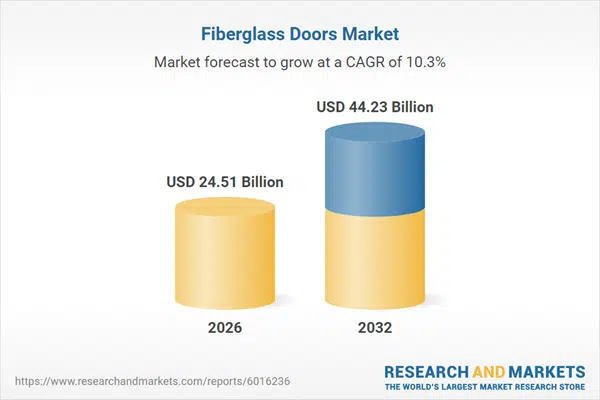
Market Snapshot: Fiberglass Doors Market Growth Overview
The Shift Towards Fiberglass
The numbers are hard to ignore. The fiberglass door market is one of the fastest-growing segments in residential building products. The global market, valued at over $20 billion in 2024, is projected to grow at a compound annual growth rate of roughly 9–10% through 2032 — nearly double the pace of the broader construction sector. In North America, the United States alone accounts for more than half of the market, driven by a convergence of factors that aren’t going away: rising energy efficiency standards, a remodeling boom that shows no signs of slowing, and a generation of homeowners who are willing to pay a premium for low-maintenance materials.
Steel doors, for decades the default workhorse of the pre-hang industry, are increasingly being substituted out. They dent. They conduct heat and cold. They corrode in coastal and humid climates. Wood composite doors have their own problems: weight, moisture sensitivity, and the ever-present threat of delamination in extreme conditions. Fiberglass threads the needle in a way no other material does. It doesn’t rot. It doesn’t rust. It doesn’t conduct thermal energy the way steel does. And with modern embossing and finishing technology, it is genuinely difficult to distinguish from real wood at arm’s length.
That last point matters more than it might seem. Homeowners don’t want to feel like they compromised. The best fiberglass door systems let them have both: the look of a painted or stained wood door, and the performance of an engineered composite that will still be going strong twenty years from now.
What's driving the shift — and why it matters for your shop?
There are a few specific forces accelerating fiberglass adoption that pre-hangers should understand clearly, because each one represents a category of demand arriving at your distributor’s door.
Energy codes are tightening. Title 24 in California is the most aggressive example, but it’s not the only one. Building codes across North America increasingly specify U-factor and air infiltration performance levels that steel doors struggle to meet without thermal breaks, and that wood doors can’t reliably maintain over time. Fiberglass doors, particularly those built around polyurethane foam cores consistently outperform both on these metrics. When a contractor in California is trying to get a permit pulled on a new build or major renovation, fiberglass isn’t just a nice option. It’s increasingly the practical path of least resistance.
Low-maintenance demand is mainstream, not premium. There was a time when “low maintenance” was a selling point aimed at the high end of the market — a reason to charge more and market to older homeowners who didn’t want the work. That’s no longer the case. Low maintenance is now a baseline expectation across all price points, driven by busy households, rising labor costs for exterior painting, and the simple reality that most homeowners aren’t going to keep up with a wood door the way a 1985 homeowner might have. Fiberglass delivers that expectation without compromise.
Aesthetics have caught up with performance. Early fiberglass doors looked like fiberglass doors. The surface texture was uniform, the grain patterns were repetitive, and experienced eyes could spot them from across a driveway. That era is over. The best panel manufacturers have invested heavily in surface embossing technology that replicates the natural variation of wood grain, the shadow lines of raised panels, and the tactile quality that makes a door feel like a statement rather than a substitute. This has unlocked the mid-to-upper residential market for fiberglass in a way that simply wasn’t possible a decade ago.
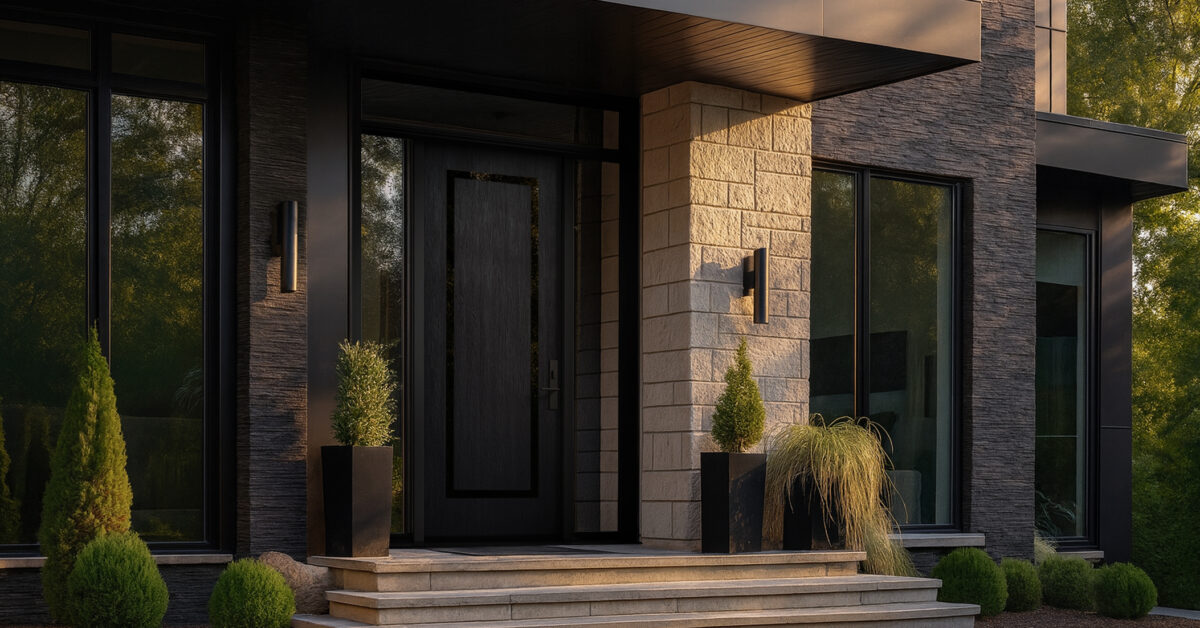
GET IDEAS: Contemporary Cherry Stainless Black Mirrored Inlay | C665
The pre-hanger's position in all of this
Here’s the thing about a growing market: being adjacent to it isn’t the same as participating in it.
Many pre-hangers in North America still carry fiberglass as a secondary or tertiary offering — something available on request, often sourced from a single supplier with limited SKUs, and not particularly well-supported in terms of technical knowledge or marketing materials. That works fine when fiberglass is a niche ask. It doesn’t work when fiberglass becomes the ask.
The pre-hangers who are going to own this market are the ones who treat fiberglass not as a line item but as a capability. That means understanding how fiberglass panels machine differently from wood composite (spoiler: they’re more consistent, with tighter tolerances, once you know what to expect). It means understanding which paint and stain systems perform well on fiberglass and building that knowledge into your shop’s quoting process. It means having a go-to panel supplier whose product you know cold — whose dimensions you trust, whose finishes photograph well for your distributor’s catalog, and whose technical team picks up the phone when you have a question.
It also means knowing what’s possible with the material beyond the standard 6-8 panel entry door configuration. Large-format fiberglass door systems, pivot doors, oversized entry systems, multi-panel assemblies are among the fastest-growing segments of the high-end residential market. The shops that are figuring out how to build them now are positioning themselves well ahead of where demand is heading.
Why MASTERGRAIN was built for this moment
MASTERGRAIN has been manufacturing fiberglass door panels for over decades. What makes the company different from other panel suppliers isn’t just the product — it’s the orientation of the business.
MASTERGRAIN was designed around the pre-hang workflow. The panels are engineered for machinability: consistent density, tight dimensional tolerances, and surface quality that holds paint and stain reliably across a production run. MASTERGRAIN also manufactures all core components, each clad in the same fiberglass material, creating a complete door system with a consistent, unified look. The product range spans traditional woodgrain profiles through to contemporary engraved panels, covering the full spectrum of residential door aesthetics. And critically, the technical support is built for shops—not just for design-build firms or large manufacturers.
That distinction — partner versus supplier — shapes everything about how MASTERGRAIN works with pre-hangers. When a shop is moving into fiberglass for the first time, or scaling up their fiberglass capability, the questions that come up aren’t about product specs. They’re about process: How do we machine this efficiently? What finishing sequence works best for our setup? How do we price a fiberglass pre-hang relative to our wood composite work? MASTERGRAIN is built to answer those questions.
The proof of that orientation is in what’s already being built with MASTERGRAIN panels. Millwork360, a Florida-based pre-hanger has developed the large-format fiberglass door system in North America built around MASTERGRAIN panels — a genuinely differentiated product that opens up the high-end residential market in ways that standard door configurations simply can’t reach. That kind of innovation doesn’t happen with a commodity panel supplier. It happens with a manufacturing partner.
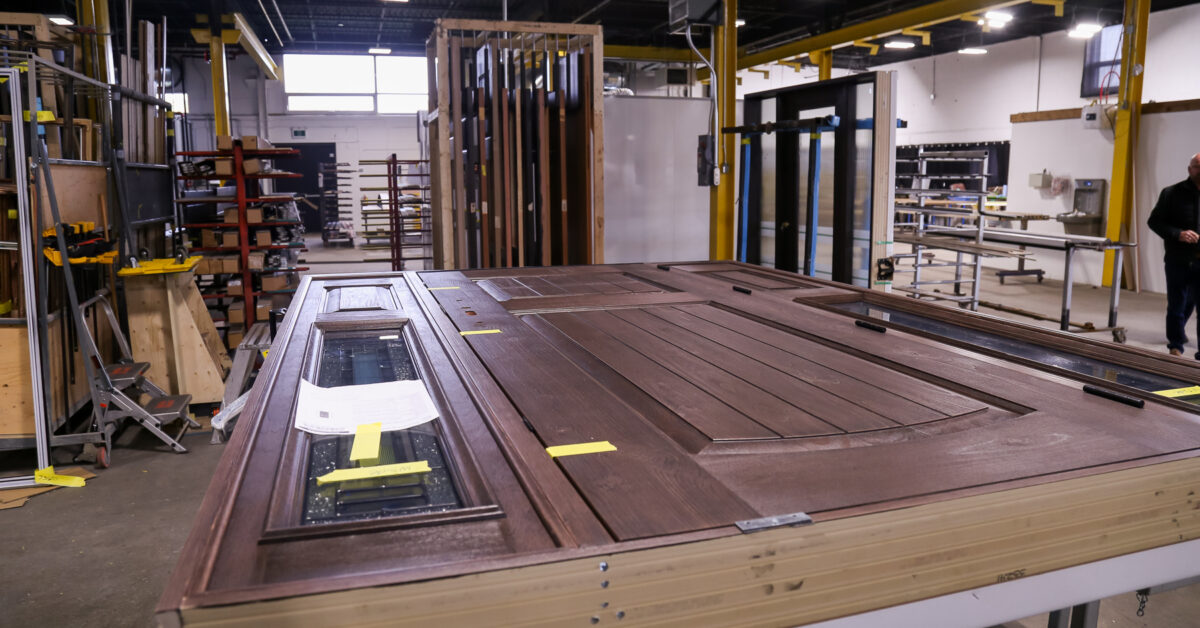
MASTERGRAIN MANUFACTURING FACILITY
The question isn't whether fiberglass grows. It's whether you grow with it.
The shift toward fiberglass is structural, not cyclical. Energy codes aren’t loosening. Homeowner expectations for low-maintenance products aren’t declining. The material technology isn’t going backward. Pre-hangers who build their fiberglass capability now — with the right panel partner, the right process knowledge, and the right product range — will be the ones their distributors call first when demand in their market accelerates.
Source Author. “Fiberglass Doors Market – Global Forecast 2026-2032.” Research and Markets 2026
If you'll be at the World Millwork Alliance Convention in Orlando Sept 14-16, 2026, MASTERGRAIN will be there.
We’d welcome the chance to walk you through our products and talk about what a partnership could look like for your shop.
Click to Book Time with our Team